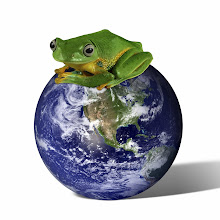
My so-called geography project has two goals: One, to help me (and via this blog, all you wonderful readers) learn, month by month and country by country, about the many peoples of this world. Two, as I learn of a country and its peoples, it will become no longer just a word on a map, a geographic stranger, but rather, a friend.
So when I read this blip about an Illinois pastor swimming the English Channel on behalf of a school in Angola, it meant a little something to me, because Angola means a little something to me,now.
***
September 20, 2009
Illinois Pastor Swims English Channel for Charity
By THE ASSOCIATED PRESS
Filed at 7:28 p.m. ET
ROCKFORD, Ill. (AP) -- Twenty-one miles and nearly 14 hours later, a northern Illinois pastor has fulfilled his goal of swimming the English Channel to raise money for a school in Africa.
It took the Rev. Mike Solberg 13 hours and 31 minutes to swim from Samphire Hoe, England, to Wissant, France, on Saturday.
Solberg is senior pastor of Second Congregational Church in Rockford.
His goal is to raise $50,000 to build a school in Waku Kungo, Angola. So far, he's raised more than $30,000.
Solberg wrote on his blog after his swim that the first five hours were good, followed by four hours that were not.
Overall, he says, ''it was a great experience.''
------
On the Net:
www.swimmikeswim.com
------
Information from: Rockford Register Star, http://www.rrstar.com
Copyright 2009 The Associated Press
Sunday, September 27, 2009
Swimming for the children of Angola

Saturday, September 26, 2009
Benin
Benin, Africa, is my geographic contemplation for September. History is layered deeply upon this tiny wedge of a country on Africa's west coast. Its capital, Porto Novo, was built in the 1600s by the Portugese as a slave port -- one of the wounds, then, through which Africa bled her people into the world.
It is to Benin that many emancipated slaves, especially from Brazil, later returned -- adding the flavor of Brazil to an African country whose official language is French.
Porto Novo is not a big city, as cities go -- has about 200,000 people. It would be a thrill, though, to turn on my t.v. and see this place featured, instead of yet another cliched re-tread of London or Rome. For every city in the world is unique; it centralizes and embodies the zeitgeist of a nation.
I found some tasty-sounding Benin recipes to enjoy this month.
Africa has problems -- but can you find any continent without them? Maybe Antarctica, but hey, it's melting.
Egypt, Madagascar, Morocco, South Africa, Ethiopia ... and Benin. Vastly different places, a scattering of geography, a handful of names out of so many on the map. And exquisite refutation of the notion that Africa fits a stereotype.
Sunday, March 1, 2009
Bahrain, for March
Time to get to know another country on the world map, the little Persian Gulf nation of Bahrain.
It sits on the shoulder of Saudi Arabia, looking out over the Gulf waters towards the restive immensity of Iran - a precarious political position if ever there was one.
This was one of the British Empire's strategic outposts until it became independent in 1971. It was once the pearl diving capital of the world and the pearl is still its national icon.
Beginning in 2002, the nation of 650,000 took steps towards democracy, holding elections for representative bodies - and though it is a Muslim state, Women are not only allowed to vote, They may also run for office.
Sunday, December 14, 2008
Azerbaijan
The first thing that I have learned about Azerbaijan is that it spent many centuries under Persian rule.
The Persians!
Today's Iranians are the remnants of that once-vast empire, which nearly overwhelmed Classical Greece; which drew a line in the Mideastern sand that Rome never crossed; which remains to this day mysterious and unknown to most of us. We can name a few of the Caesars, most of us -- but who other than specialists can name a Persian, or a Parthian?
Azerbaijan in the modern era passed back and forth between Persia and the new power in the region, Russia. Most of the 20th Century it spent as a Soviet republic, supplying the bulk of the USSR's gasoline.
Today, it finally enjoys independence, and in what is left of December, I shall try to learn something of its ancient culture, and maybe a few words in its native language.
If nothing else, I now know the capital: Baku.
Monday, December 1, 2008
Azerbaijan for December
New month, new place.
It will be fun to learn about a country about which I know absolutely nothing. It took me a little while to even find it on a world map.
Last of the "a" countries, a fitting end for 2008.
Sunday, November 23, 2008
Albania Update
The Tirana Times reports that an $11 billion petroleum discovery has recently been made in northern Albania.
Properly developed, this resource could be a godsend for this little country which has endured so much over the years. But Albanians are very conscious of the corruption that threatens their fledgling democracy -- and petro-wealth and corruption are a terrible mix, as events have shown elsewhere in the world.
Friday, November 21, 2008
Austria has a president, too!
Getting to know the leaders of other nations:
From Wikipedia:
Heinz Fischer (born 9 October 1938) is the federal president of Austria. He took office on 8 July 2004.
Born in Graz, Styria, Fischer received a humanistic education, taking his "Matura" exams in 1956. He then studied law at the University of Vienna, earning a doctorate in 1961. Apart from being a politician, Fischer also pursued an academic career, and became a Professor of Political Science at the University of Innsbruck in 1993.
In January 2004 Fischer announced that he would run for President to succeed Thomas Klestil. He was elected on 25 April 2004 as the candidate of the opposition Social Democratic Party of Austria (SPÖ).
Fischer was sworn in on 8 July 2004 and took over the office from the presidents of the parliament, who had acted for the president following Klestil's death on 6 July. Since he was elected President, he has gained more and more favour and is today, according to many surveys, the most popular and trusted Austrian politician.
On being nominated for Federal President, Fischer himself said that he hated antagonising people and that he considered this quality an asset rather than anything else.
[Sadly, sustaining popularity as a political leader is nearly impossible, as the once-popular U.S. President George Bush has learned, and which President Obama, too, will surely discover. Either Fischer has done nothing gutsy and controversial during his tenure, or he is an incredible leader.]
Fischer is a self-avowed agnostic. He has been married since 1968. The couple has two grown-up children. Fischer enjoys mountaineering and has been president of the Austrian Friends of Nature for many years.
Thursday, November 13, 2008
Vere Childe -- Australia's gift to archaeology

For sheer adventure, Indiana Jones might outdo the late Vere Gordon Childe. But Indiana is Hollywood. Vere Childe was for real.
I’m supposed to be studying Austria this month but that doesn’t mean I can’t still learn a little more about places of past months and the people therein.
So I will muse momentarily on this man, who was born in Sydney, Australia in 1892 but did not stay put. He spent time in England, Greece, the Balkans, the Orkney Islands, Iraq, India and the U.S. Tragically and ironically, after all that, he died back in his homeland -- falling from a cliff in the Blue Mountains of New South Wales.
Mr. Childe is considered one of the twentieth century’s most important archaeologists … and one who brilliantly synthesized available knowledge of Old World history. He had a gift, a keen ability to discern and illuminate the main currents of prehistory, as shown in one of his best-known works, “The Dawn of European Civilization.”
Aussie, be proud!
Sunday, November 2, 2008
New month, new place
In a month's time, especially when one is as scatter-brained as I am, one cannot possibly come to know a country. Still, I feel as if I drew a little closer in October to the millions of people who call Australia home, and to their history.
Across the world now I go in this new month of November, to the land of Austria.
Wilkommen!
Sunday, October 26, 2008
Australia continued

I have learned this week that Kevin Rudd, Prime Minister of Australia, speaks fluent Mandarin Chinese. Very cool. And very practical, considering proximity and considering the growing role of China in the world.
Maybe being bilingual ought to be a requirement for a US president.
Something else about the man:
"Researchers looking into Mr Rudd's family history discovered that his fourth great-grandfather, Thomas Rudd, was transported to Australia in 1801 to serve a seven-year sentence for "unlawfully acquiring a bag of sugar".
However, his crime is eclipsed by that of the prime minister's paternal fifth great-grandmother Mary Wade, a London street urchin who made a pittance by sweeping streets and begging.
In 1788, aged 12, she and an older girl coaxed an eight-year-old girl into a toilet where they relieved her of "her dress, petticoats, a linen tippet, and a cap and absconded".
Wade was sentenced "to be hanged by the neck til she be dead" after a trial at London's Old Bailey in January 1789 but the sentence was commuted to transportation to the colony of New South Wales.
Another relative of the prime minister was convicted of forging coins. Mr Rudd's paternal fifth great-grandmother Catherine Lahey arrived in Sydney in 1800 after forging one shilling and sixpence to pay her rent."
The article notes that convict ancestry is fairly common in Australia, and is today a badge of honor, not shame.
Saturday, October 25, 2008
Geography Project -- Australia

I was supposed to study Australia during the month of October, in my so-called geography project. Well, I still have a few days left in the month to try to learn something about the place -- the only continent in the world that is encompassed by a single nation.
As of this morning, I knew no more than the average six year old American kid about this country. Kangaroos and koala bears and people who say Crikey a lot. There's an Outback Steakhouse in my city that serves Bloomin' Onions. For all I really know, nobody in Australia actually eats those things.
Now I know that the capital is Canberra and that Australia is composed of six states and a handful of islands. I know that that scoop out of Her northern shore is called Gulf of Carpenteria.
Still pitiful, such lack of knowledge.
I don't know of Her great writers, Her cultural personalities, Her inventions, Her history beyond the fact that the Dutch were the first Europeans to sight Her and that Great Britain settled the place.
Saturday, September 27, 2008
Sounds tasty
From www.visitaruba.com
Giambo (Okra Soup/Gumbo) and
Funchi (Corn-Meal Mush) Serves 6-8
This dish is another typically Aruban dish: Giambo (pronounced ghee-yam-bo) is the Antillean gumbo, a thick, hearty soup. The pur?d okra gives it a slippery consistency.
Soak overnight:
1/2 lb. salted beef
Discard water. Place the beef in a heavy kettle with:
2 quarts fresh water
1 ham hock
1 or 2 onions
a few sprigs of parsley
1 or 2 carrots
1 bay leaf
1 celery stalk
Bring to a brisk boil. Reduce heat and simmer for about one and a half
hours, or until meat is tender.
Place in the simmering kettle.
1 lb. red snapper fillets
After a few minutes test the fish with the tines of a fork, and remove from
the broth when it flakes easily. Make a bite-size chunks of the fillets. Remove
the beef from the broth, cube and set aside with the fish. Strain the broth
and return it to the fire. Discard the ham hock and vegetables.
To the simmering broth add:
2 lbs. okra, washed and sliced
A few sprigs crushed yerba di hole, or fresh basil
1/2 tsp. black pepper
Simmer until the okra is tender. With a lele stick, or its equivalent, a wire
whisk, reduce the okra to a pur?. Return the cubed beef and red snapper
pieces to the kettle. Heat thoroughly and adjust seasonings.
Garnish giambo with:
1/4 lb. cooked shrimp
Funchi (Corn-Meal Mush) Serves 6
Funchi is a must with this delicious soup and we have therefore included the recipe as well:
Funchi, the Antillean staple, is a simple corn-meal preparation. It must be
vigorously stirred while cooking and to the rhytm of these rotations
old-time cooks repeated. Un pa mi, un pa bo, un pe. Funchi was then
scooped from the kettle with a little round calabash, and the "funchi ball"
was placed on each individual plate - "One for me, one for you, one for him".
Mix in heavy saucepan:
1 1/4 cups cold water
1 1/2 cups corn-meal
1 tsp. salt
Stir in:
1 1/2 cups boiling water
1 tbs. butter
Bring to a brisk boil over high heat and cook for three minutes. Continue
cooking an additional three minutes, stirring the funchi vigorously with a
wooden spoon or palu di funchi. When the mixture is very stiff and pulls
away from the sides of the pan, remove from the fire. Turn out in to a deep,
well-buttered bowl and cover with a plate. Now shake the funchi down in
the bowl, then invert it on a serving platter.
For a special Sunday breakfast fry sliced funchi in butter and serve with
crisp bacon and scrambled eggs.
Monday, September 22, 2008
Aruba
"At the foot of these fairy mountains [the Catskills of New York], the voyager may have descried the light smoke curling up from a village, whose shingle roofs gleam among the trees ... a little village of great antiquity, having been founded by some of the Dutch colonists, in the early times of the province ..." -- Irving, Rip Van Winkle.
Few are the reminders today that the plucky and late-forming nation of The Netherlands once had an empire in the New World. New Yorkers know it, for their great city began as a Dutch project. And down in the warm Caribbean Sea, a chain of islands still holds ties to the faraway land of tulips and windmills.
One of those islands is called Aruba and in the waning days of September, it will be my geographic study, as I revive this long-suffering project. Technically, it is not an independent nation, it is autonomous but still part of the Netherlands. There are many places such as this in the world, either by choice or by force.
Aruba is a speck in the sea, a mere 19.6 miles long and 6 miles wide, crammed with 90,500 people, but it enjoys one of the highest standards of living in the Caribbean. Of course the official language is Dutch, though the native language is something called Papiamento.
When I have more time, I will upload a picture of the island's distinctive divi-divi trees.
Sunday, June 1, 2008
Friday, May 2, 2008
Angola, continued
Angolans love seafood and they love their food spicy. I like that!
From wikicookbook: After decades of civil war, Angola is picking up the pieces and rebuilding the country. Because few years have passed from the end of the civil war, there isn’t yet any important food festival celebrated here. Because of the famine that is still haunting most of the country, food traditions are rarely celebrated. One of the most loved festivals is Island Party which is celebrated for two days in November. The purpose of this celebration is to protect the Isle of Luanda from sinking and people from drowning. People throw fruits or even cooked dishes in the water and offer prayers.
One of the best known Angolan desserts, cocada amarela shows the extent to which the Angolan chefs have taken the art of cooking in their quest for a flavour that combines the traditional African ingredients with the European taste. The main ingredients of this dish are cloves, Sugar, coconut, egg yolks and cinnamon.
Unfortunately, due to the conflicts and wars that Angola has gone through, there are not many Angolan chefs. However, other chefs around the world got inspired by the Angolan cuisine and began expanding it and familiarizing the public with the wonderful flavoured Angolan dishes.
The typical Angolan meal consists of a starchy food such as rice, yams or flour cooked into porridge. When a meal consists of meat, the tradition requires that the men and the elderly receive the biggest portions. The men in the Angolan families make beer from honey and from such grains as maize or millet. They also make wine from the sap of certain kinds of palm trees. Usually, in most ethnic groups in the Angolan society, it is considered very impolite to refuse the food that is offered to you. This is considered a sign of disrespect. The tradition requires that the women are the ones who cook all the food and the men in charge with providing the beverages for the meal.
Cocada amerela recipe (from www.celtnet.org):
Cocada Amarela
(Yellow Coconut Pudding)
Origin: Angola Period: Traditional
180g sugar
700ml water
2 whole cloves
1/2 coconut
6 egg yolks
ground cinnamon
Method:
Cut the coconut into easily manageable pieces and finely grate half of them. Combine this with the sugar, water and cloves and place in a small saucepan and bring to a boil, stirring constantly. Once it boils continue to cook until the mixture reaches 230°C as measured on a confectioner's thermometer then remove from the heat.
Beat the egg yolks until they thicken then add 120ml of the coconut syrup and stir together. Pour this mixture into the saucepan and stir to combine. Return to the heat and cook on medium heat for 10 minutes, stirring frequently, until the pudding thickens enough to pull away from the sides and base of the pan. Allow the custard to cool, spoon into serving dishes then sprinkle with ground cinnamon and serve.
Thursday, May 1, 2008
New month, new nation, Angola

I spent the evening tying up the asparagus stalks outside. The neighbor's little black Scottie dog came over to keep me company.
May has arrived. It's time for me to learn about a new country. Angola is my subject for this month -- an African nation on the west coast of that continent. At 481,350 square miles, it's no speck like Andorra -- it's twice the size of Texas.
The name derives from an African word for king, ngola.
This vast country is mostly a great plateau, with a healthful and refreshing climate. The nation is also blessed -- or perhaps cursed -- with huge oil reserves, only recently tapped, and predictably not being shared with most of the population.
The people are Bantu, linguistically. Most are Christian. And Portugal was the nation's colonial ruler until the 1970s.
So that's the place in a nutshell. It will be a challenge to dig deeper, to learn about this country which is not only very different culturally from my own experience, but which is also largely off the world's radar screen. Who are their heroes? What are their special dishes, their authors, their cherished holidays?
Saturday, April 12, 2008
Andorra for April, Number Four in my geography studies

A wave crashes upon the beach, dropping upon the sand its treasures. Perhaps it leaves a shell, a bit of driftwood, a disoriented crab, a strand of seaweed.
So it is, too, with the great ocean of time. It carries people and ideas and then leaves them, high and dry, a curiosity upon the sands of history.
Wedged between France and Spain, in the Pyrenees Mountains that separate those two nations, is a sovereign state just twice the size of Washington, D.C., USA.
In my studies of world history, I am still in ancient Rome. Christianity is still a novelty, and Mohammed and his armies, nearly six hundred years in the future. So I know almost nothing about the great Frankish king Charlemagne, who in the ruins of post-Roman Europe found himself battling mightly against the onslaught of Islam.
In those days, Andorra was born, one of the buffer states established by that king to prevent the Muslims in Spain from over-running Christian France.
By odd and obscure quirks of history, Andorra is the only remaining example of those buffer states, and though Charlemagne has mouldered in the dust for more than 1,300 years, and though the borders of the nations of Europe have shifted all around it, Andorra has retained her independence.
The weary waitress clearing tables at Dinah's Diner in Kansas or Idaho may dream of France, or of the blue seas that lap the coasts of Spain or Greece -- but who beyond the academics or geography buffs -- and the 64,716 people who live there, and their immediate neighbors, has ever heard of Andorra?
Like the Amish of Pennsylvania; like the monks of the ancient, almost extinct Christian sects who zealously guard the holy places of the Holy Land; like the sunken wreck of the battleship Arizona in Pearl Harbor, Andorra is an artifact of history, flotsam in the tide of time.
But it is also a living nation, proud of its traditions, proud to have officially joined the United Nations on July 28, 1993. On that day, Pres. Oscar Ribas declared, "Avui es un dia historic per a Andorra."
I interpret that as, "Here is a historic day for Andorra."
He continued: "Andorra ja no es un vestigi del dret feudal i medievval, sino un Estat homologat segons els criteris del dret internacional modern."
My perhaps faulty translation would be: "Andorra is not just a vestige of the feudal era, but a state that meets the criteria of the modern era."
Friday, February 1, 2008
On to Albania
I did a lousy, lousy job with my geography project in January. I didn't upload a single recipe or make contact with any Afghan bloggers. I did learn how to say hello in Pashtu, asalaam alaikim. Which is, of course, an Arabic borrowing and I already knew that phrase.
Nonetheless, it is now February and I will move on, on to the next country, and try to do better.
So, on to Albania.